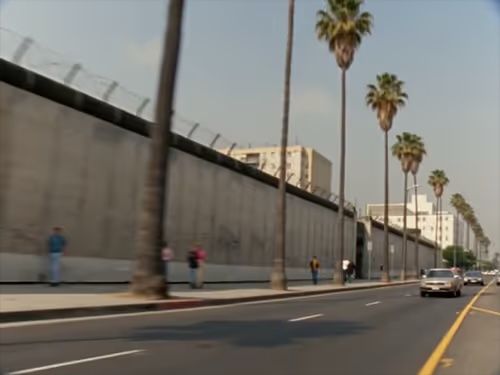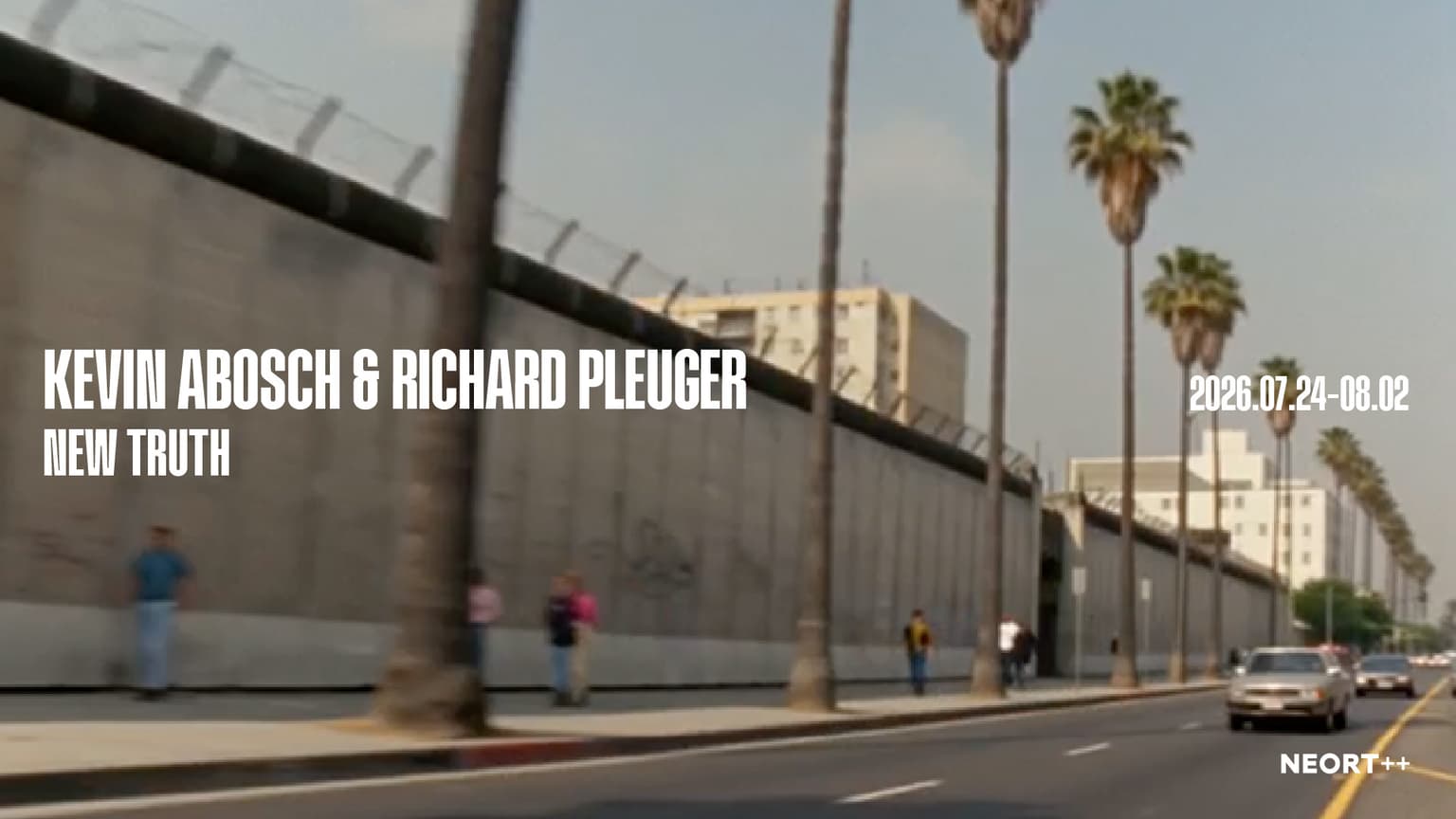
A photograph has never been a record of the truth. It looks like the world without being it, and we mistake the resemblance for proof. NEW TRUTH starts in the gap that opens there, between the image and the real.
The works are stills pulled from synthetic video. The model that produced them was trained in part on the artists' own photographs of Los Angeles and Berlin, so what it generates is hallucinated out of an archive that once recorded those two cities for real — hybrid places you seem to remember but cannot locate. Actual truths that never happened.
No single hand chose them. Abosch and Pleuger worked blind, each unable to see what the other was picking, and only the images they landed on independently — the ones they agreed on without ever discussing them — were kept. Nothing here was checked against the world. It was checked against another person. Truth by convergence rather than correspondence.
They carry the soft, low-resolution grain of Hi8, the format from the years when a camcorder first put the recording of "truth" into ordinary hands. High definition flatters everything now, and the most convincing images it produces are usually the most synthetic. This coarser surface does the opposite. It shows you it was made.
NEW TRUTH treats truth and value as things assigned to an image, not found in it. The artists assigned them once, by agreeing. Anyone standing in front of the work assigns them again. In a culture filling up with synthetic memory, what the show asks for is attention and a little slowness — enough to decide for yourself what you are prepared to believe.